Well, I did download Google Earth and spent some time figuring out how to measure distance…with little success. I did however; find success in straight-line measurement. So my mileage is probably short because I could only do straight lines with a bit of success. Okay, I calculated 1495.19 miles on the archipelago. I began with the last bit of the state before it broke into islands. I also came up with 4682.09 miles for the Aleutian Trench.
I use Google Earth with my students on their IPADS each week and it is very successful. I have one student who recently moved from Tennessee and was able to locate her old home and share it with the class---what a great teaching tool!
Sunday, November 14, 2010

Module 4: Earthquakes and Tsunamis
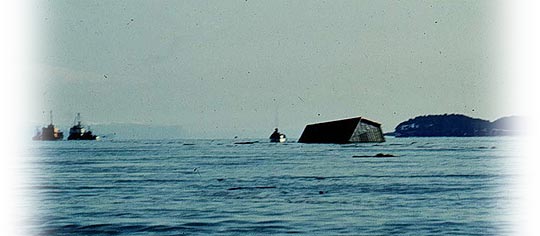
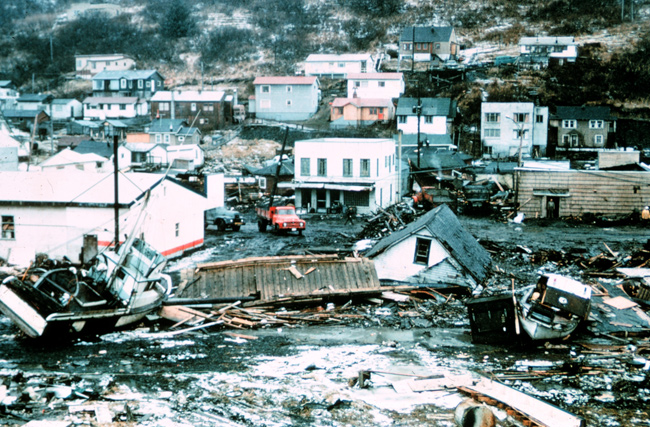
The tectonic forces that caused the earthquake were with the Pacific Plate sub ducting under Alaska. This pressure caused the earthquake to happen. After watching the video of Valdez I began to make connections to the hometown of my grandmother-Afognak village. The devastation from this earthquake caused a tsunami that destroyed her village. Just as Valdez relocated, the people from the village of Afognak relocated to the villages of Port Lions and Ouzinkie.
You can still walk through the old Village of Afognak and see many houses still standing. At one time I walked through to see the town store and post office in the lagoon.
People have used this experience to be more aware of earthquakes and tsunamis. In our town of Kodiak there are tsunami warning alarms throughout. Each and every Wednesday we have tests of these alarms at 2:00 p.m. to ensure they are working and ready to go. If the alarms go off at any other time, we know it’s business and not a testing time.
I have taught many lessons from the ATEP (Alaska Tsunami Education Program) to show my students about the 1964 Earthquake and Tsunami. We have viewed elder interviews and read stories that relate to this topic. I feel it is vital that our students know the importance of being educated about earthquakes and tsunamis---we do live on an island!!!
Module 4: Cultural Connections Part 1
I really enjoyed watching all three of the videos. I can say there are plenty of similarities between the people of Hawaii and the people of Alaska. We share the “island” living and the coastline eating. It is always neat to watch the similarities between the East Coast and the Pacific Ocean. We are full of fisherman and fishing lifestyles. I didn’t realize there were whaling ports in Massachusetts? That shows how little I know about the East Coast.
The differences between Massachusetts and the island lifestyles are the population make-up. The Massachusetts folk are a Heinz 57 of culture and diversity. Most of the Hawaiian footage was that of Hawaiians, as well as the footage from Alaska. I also felt that my hometown, Kodiak, fits in well with the Nanwalek culture and people.
EXTEND
• What other cultures do you know that live in the shadow of volcanoes?
• How does living on volcanic islands influence culture?
• What other related stories do you know?
When I think of volcanoes----I think of countries with many islands. Of course we have the Hawaiian islands, The Aleutian Islands, and….what came to mind for me was the Indonesian Islands. Perhaps it’s been the current happenings over in that area of the world, but I thought of them first. I also think of the Filipino People who are close and would be affected by the volcanic activity.
I live on an island that is shadowed by volcanoes regularly. With the constant worry of volcanic activity (most recently Mount Redoubt) on our island we are always prepared. Our ancestors have done a great job of teaching us, through storytelling) how important it is to be prepared. With the introduction of websites as http://www.avo.alaska.edu/
We are very fortunate to be able to monitor activity. In fact, when Kevin Costner was making the movie, The Guardian, he chose not to come to Kodiak with fear he may be stuck!
Science can impact indigenous cultures and their way of life in both positive and negative ways. Through modern day monitoring we are able to inform citizens very quickly of things as earthquakes, volcanic eruptions and tsunami warnings. For this, we are quite fortunate. However, when we talk about interrupting religious areas to build stations, we are not taking into consideration the history and the importance of their way of life. Often, things happen for a reason---as my grandmother instilled into me. Science is a way of life---it has always been. Nowadays we just don’t do it by watching the weather, or watching the tides, or the constellations in the sky.
I am also fortunate to have spent some time in Hawaii and watch the way their stories have shaped their lives…. just as my heritage has shown me.
Quick story: My husband and I spent a week on Rarotonga, Cook Island for our honeymoon. We flew down and met the most remarkable lady, Peta. Peta was a native to the island. She was of simple existence, such as myself, and couldn’t comprehend the lifestyles of those who visited her island. We spent the week getting to know each other very well and when we departed, her last words to me were---thank you for being my friend, North Pacific Islander. Although we were of two different worlds, we were of very similar beliefs. We had become friends through our similar values of being Pacific Islanders.
Tuesday, November 2, 2010
Module III: Landscapes of Life
I am beginning to recall information from my college days in a science course at UAF: Earthquakes, Volcanoes and Glaciers. Throughout my life--I haven’t been strong with the area of science....I was so excited to begin to teach place-based learning and it allowed me to shine with my LOCAL experiences...and as I reviewed the resources we were assigned this week, It also brought back a lot of stories that were told while I was growing up in Kodiak. My family was affected by the 1964 Alaska Earthquake and the devastation that was to follow on Kodiak Island. The whole IDEA of a tsunami WAS/IS real for my family as they all were involved in the 1964 Kodiak Tsunami.
On another note, throughout the past few years, many teachers within our school district (and other districts) have been field testing some awesome teaching units in the Alaska Tsunami Education Program. This was a grant funded project through the University of Alaska Fairbanks that really brought to light the whole world of earthquakes and tsunamis. (The website is listed under great resources.)
And when we talk about erosion and landscape changes, we see it in Kodiak quite regularly. We are an island in the Gulf of Alaska and we are in the midst of a lot of tidal activity and change. In fact, the two villages in which my families were born/raised are experiencing such change. My mom was born on the westside of our island in a village called---Karluk.
As a child I remember visiting my grandparents home and seeing the historical buildings throughout the many faces of the village. Well, to put it blankly---much of Karluk has FALLEN into the lagoon. The old village was built on the side that experiences a lot of wind and tide change. The erosion has caused the OLD side to fall into the lagoon. And to relate to my mom’s side of the family--my dad’s village is experiencing much of the same landscape changes. In fact the area or POINT that was named for it’s purpose---Graveyard Point----is now eroding so that the buried are beginning to fall into the water. Both places I speak of are experiencing erosion problems.....ones that the originators had no idea of. That makes me wonder-----has erosion increased? Or did people assume that building so far off the coast would allow for SECURITY?
When I talk with students about erosion and change with the landscapes around our island---I bring up two particular locations. These are the Buskin River and the Pasagshak River. These two locations are great salmon fishing rivers where people are often found from May until September. The discussion we often have include--WHY DO THE MOUTHS OF THE RIVERS LOOK DIFFERENT EVERY YEAR? Each of these rivers hang off of the main waters and do not have shelter to protect their shores....therefore the mouths change each year....great discussion on erosion and landscape,etc.
Great Resources
This website has ALOT of information about educating children about earthquakes and tsunamis. It has great resources and lessons.
http://www.aktsunami.com/
This website is connected to one of our local native corporations, Afognak Native Corporation. They have began to fund and develop lessons that incorporate history and language. You will see lessons/ units to teach on local earthquakes and tsunamis.
http://www.afognak.org/education/index.php
Subscribe to:
Posts (Atom)